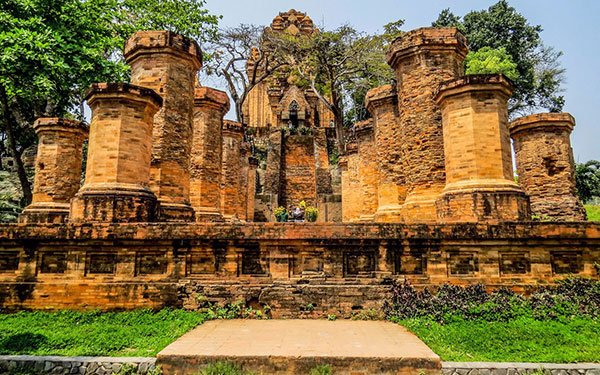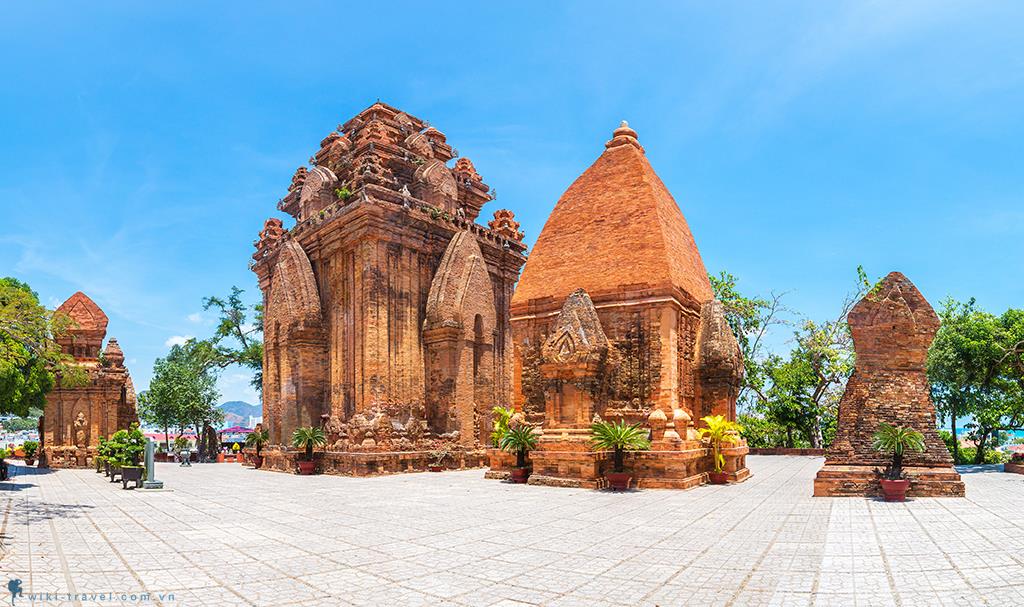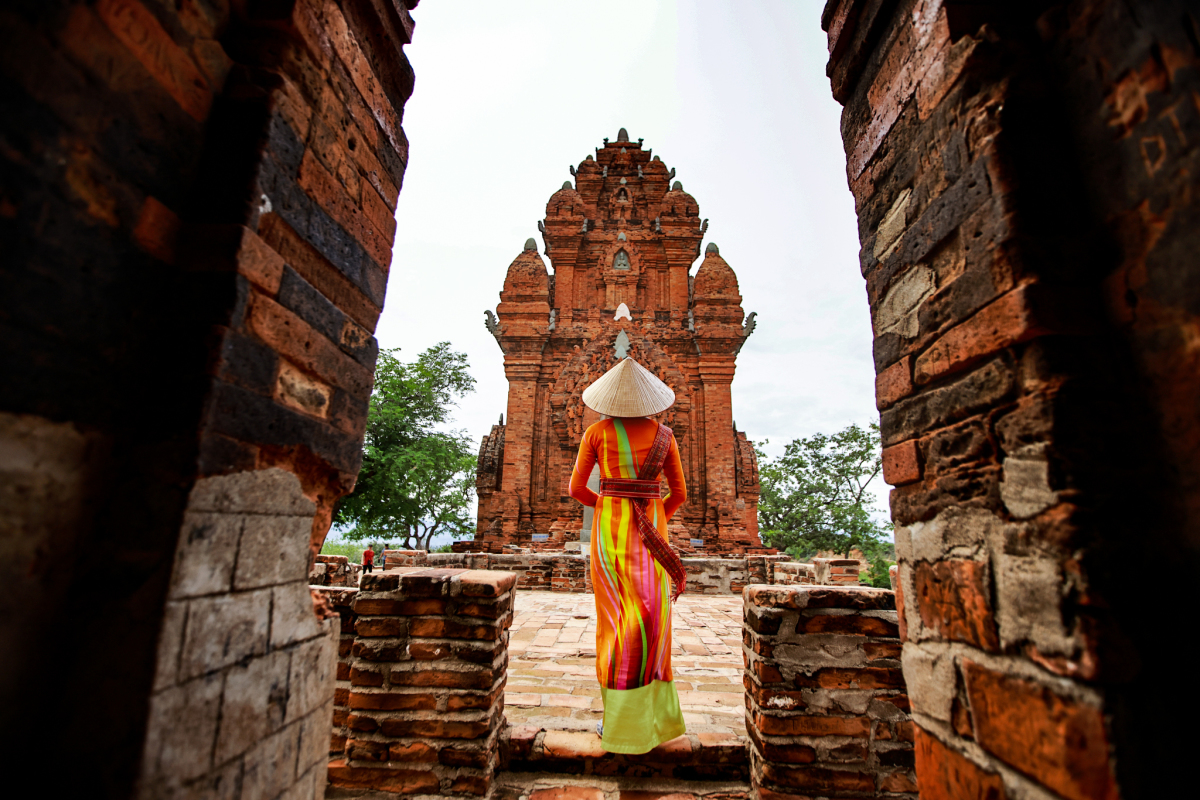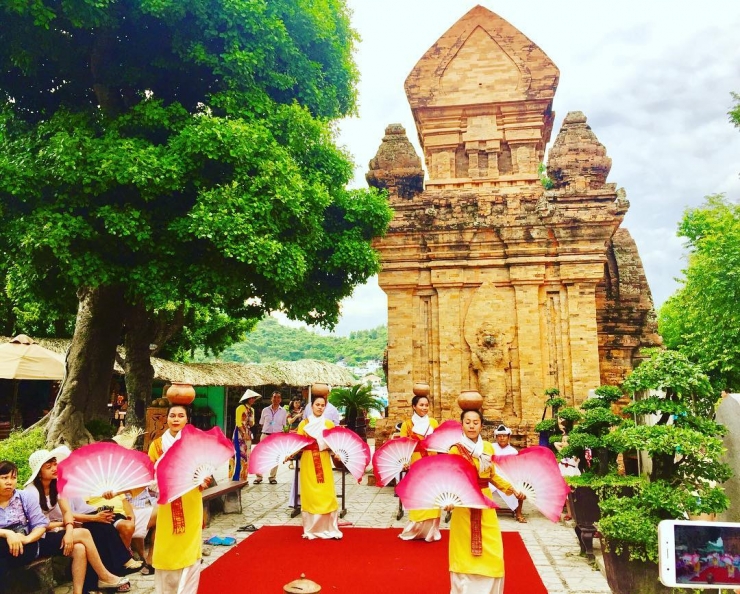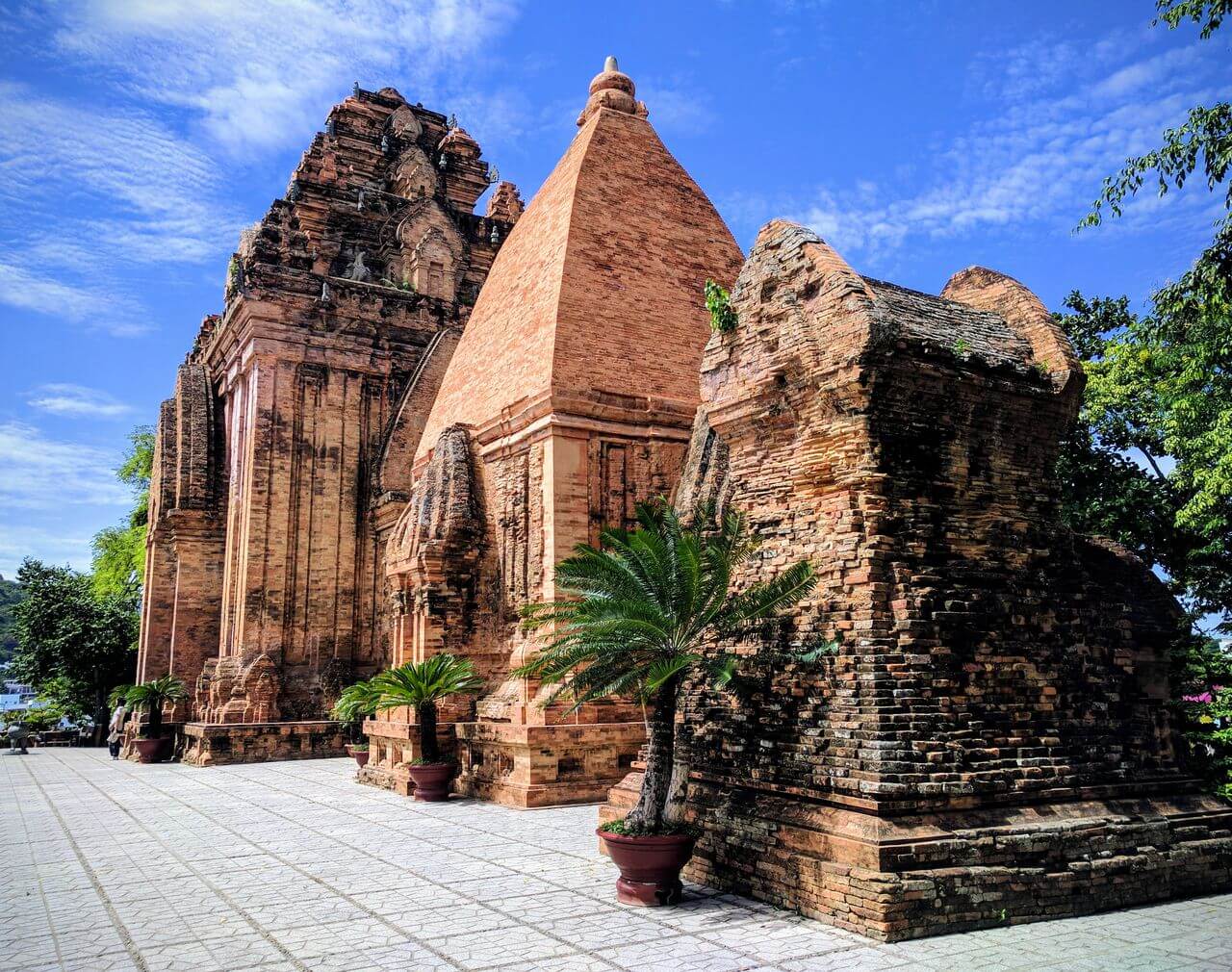
Location: Po Nagar Cham is situated on Cu Lao marble hill, 2km north of Nha Trang, in Khanh Hoa Province.
Characteristic: Po Nagar Cham Towers were built between the 8th and 13th centuries. The largest of the four remaining towers was built in honour of the Goddess Po Nagar, also known as Lady Thien Y Ana or Lady Mother of the Kingdom.
She spent part of her life in teaching new weaving and agricultural techniques. The 22.5m tower contains her sandstone statue sitting cross-legged on lotus-shaped stone estrade. The statue is 2.6m high (including the Yoni-shaped stone pedestal). The statue has ten hands, eight of which each holding a specific object illustrating the intellect and power of her. The remaining towers were dedicated to different gods: the southeast tower, the northwest tower and the south tower.
Not only are the towers famous for their architecture and sculpture, but they are also well-known for their great significance in history, nationalism, and archaeology.
Standing on the top of the hill, one can admire the beautiful landscapes of the coastal region of Nha Trang.
 Latest News
01/05/2026
When travelers think of Vietnam, names like Hanoi, Halong Bay, Hoi An, or Ho Chi Minh City often come to mind. These iconic destinations are popular for good reason. However, beyond the well-trodden routes lies another Vietnam — quieter, more authentic, and deeply connected to nature and local culture. For travelers who have already visited Vietnam or those seeking meaningful, off-the-beaten-path experiences, the country offers many lesser-known destinations that remain largely untouched by mass tourism. Here are some of Vietnam’s hidden gems worth discovering.
12/04/2025
Vietnam Airlines announced that starting May 17, 2025, all its domestic flight operations will be relocated to the newly opened Terminal T3 at Tan Son Nhat International Airport.
11/07/2025
In Vietnam, coffee is not merely a drink - it is a way of experiencing life. It is conversation, stillness, memory, rhythm, and a quite ritual that unfolds throughout the day. From the shaded sidewalks of Hanoi to the breezy riverside cafe in Saigon, coffee in Vietnam reflects the character of each region: refined, poetic, bold, and deeply personal. To travel through Vietnam is to follow the aroma of roasted beans, the whisper of coffee filters dripping slowly, and the soft clinking of glasses in morning life. Featured Tours