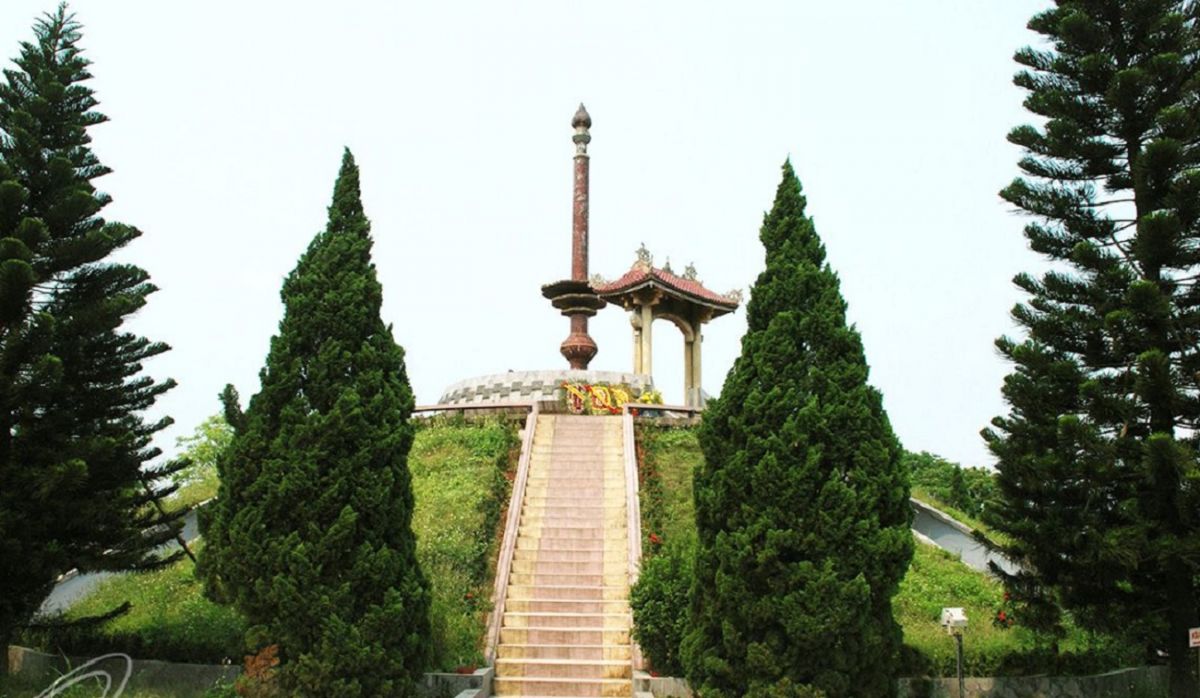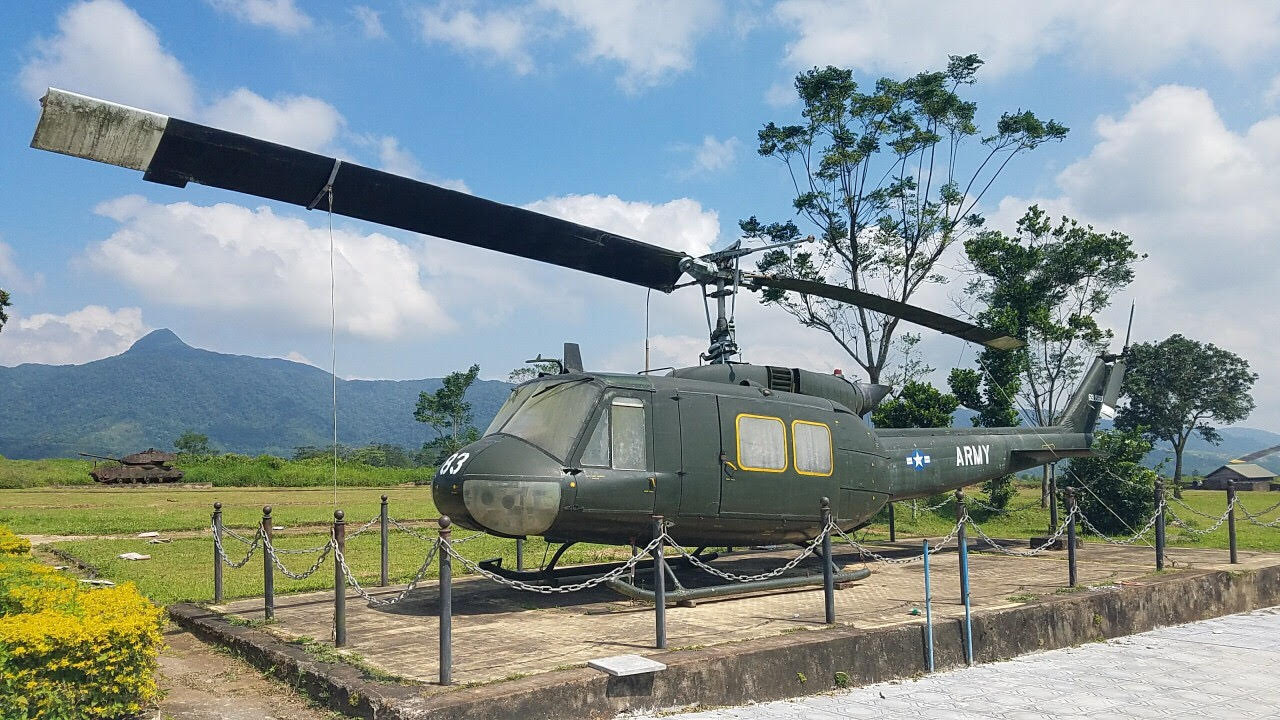
In 1954, Ho Chi Minh’s government in the north and the French colonial administration in the south agreed an armistice that involved a ‘temporary’ partition of Vietnam. The Ben Hai River, in the extreme north of Quang Tri province, became the arbitrary line dividing the two halves of the country. When the southern ‘government’, backed by the US, reneged on the national elections promised in the agreement, Quang Tri became the theatre where most of the important scenes of the Vietnam War were staged.
From then until the early seventies when the Vietnamese army overwhelmed the defences along the southern edge of the DMZ, Quang Tri was a battlefield, one of the most intensively bombed areas in military history. It left a barren desert created by hundreds of thousands of tons of high explosive, estimated to be the equivalent of seven Hiroshima atom bombs, as well as napalm, phosphorous and herbicide.
Today, nature has reclaimed much of the land, but craters are visible almost everywhere in the area.
It has been estimated that nearly a third of the ordnance failed to explode. Clearance is continuous, but there are still enough live landmines, bombs and shells to add to the tens of thousands of children and adults killed or maimed by unexploded ordnance since 1975. The numbers are dropping, but incidents of death or injury among local people are reported almost every week.
Accidents affect children walking to and from school or the market who mistake grenades for toys, farmers ploughing or planting crops, building workers digging wells or laying foundations, and poor peasants attempting to dismantle a bomb or shell to sell the scrap metal for a small amount of cash.
Apart from war memorabilia, little remains of the pre-war towns and villages. Nevertheless, there are a couple places of interest beyond those directly linked to the war.
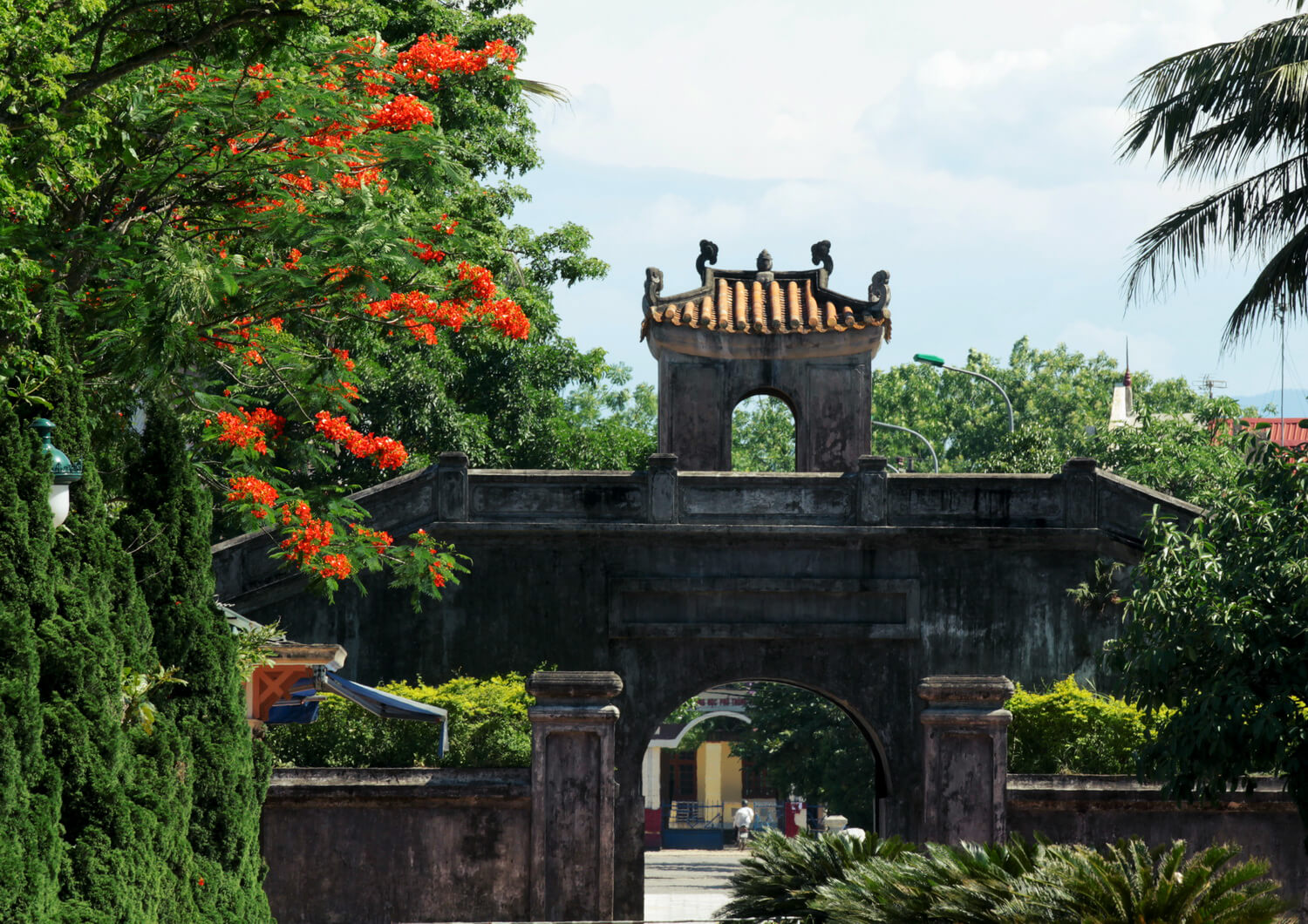
Quang Tri town, once an important citadel town and the provincial capital, is mostly an evocative ruin. There are a few remains of the citadel, built in 1824 by King Minh Mang, but not much else.
On the other hand, Dong Ha, the present provincial capital, has flourished. It has a large deepwater port, a direct route to Laos via the Lao Bao border gate 80kn to the west, and is likely to be an important hub on the planned trans-Asia highway. It has a decent hotel and is a good centre from which to explore the DMZ in depth.
Near the Laos border, Huong Hoa is a unremarkable small town in the foothills of the Annamite mountains. Formerly known as Khe Sanh, it’s known for the coffee produced from plantations developed by the French. The interest for our visitors is a German project linking Kraft Foods Germany and the Dutch ‘Douwe Egberts’ coffee company with a Vietnamese Arabica coffee producer to develop high quality coffee without exploiting the farmers or damaging the environment.
A sizable proportion of Huong Hoa’s population is poor Bru Van Kieu ethnic minority people – you’ll probably meet women smoking long-stemmed pipes.
 Latest News
01/05/2026
When travelers think of Vietnam, names like Hanoi, Halong Bay, Hoi An, or Ho Chi Minh City often come to mind. These iconic destinations are popular for good reason. However, beyond the well-trodden routes lies another Vietnam — quieter, more authentic, and deeply connected to nature and local culture. For travelers who have already visited Vietnam or those seeking meaningful, off-the-beaten-path experiences, the country offers many lesser-known destinations that remain largely untouched by mass tourism. Here are some of Vietnam’s hidden gems worth discovering.
12/04/2025
Vietnam Airlines announced that starting May 17, 2025, all its domestic flight operations will be relocated to the newly opened Terminal T3 at Tan Son Nhat International Airport.
11/07/2025
In Vietnam, coffee is not merely a drink - it is a way of experiencing life. It is conversation, stillness, memory, rhythm, and a quite ritual that unfolds throughout the day. From the shaded sidewalks of Hanoi to the breezy riverside cafe in Saigon, coffee in Vietnam reflects the character of each region: refined, poetic, bold, and deeply personal. To travel through Vietnam is to follow the aroma of roasted beans, the whisper of coffee filters dripping slowly, and the soft clinking of glasses in morning life. Featured Tours