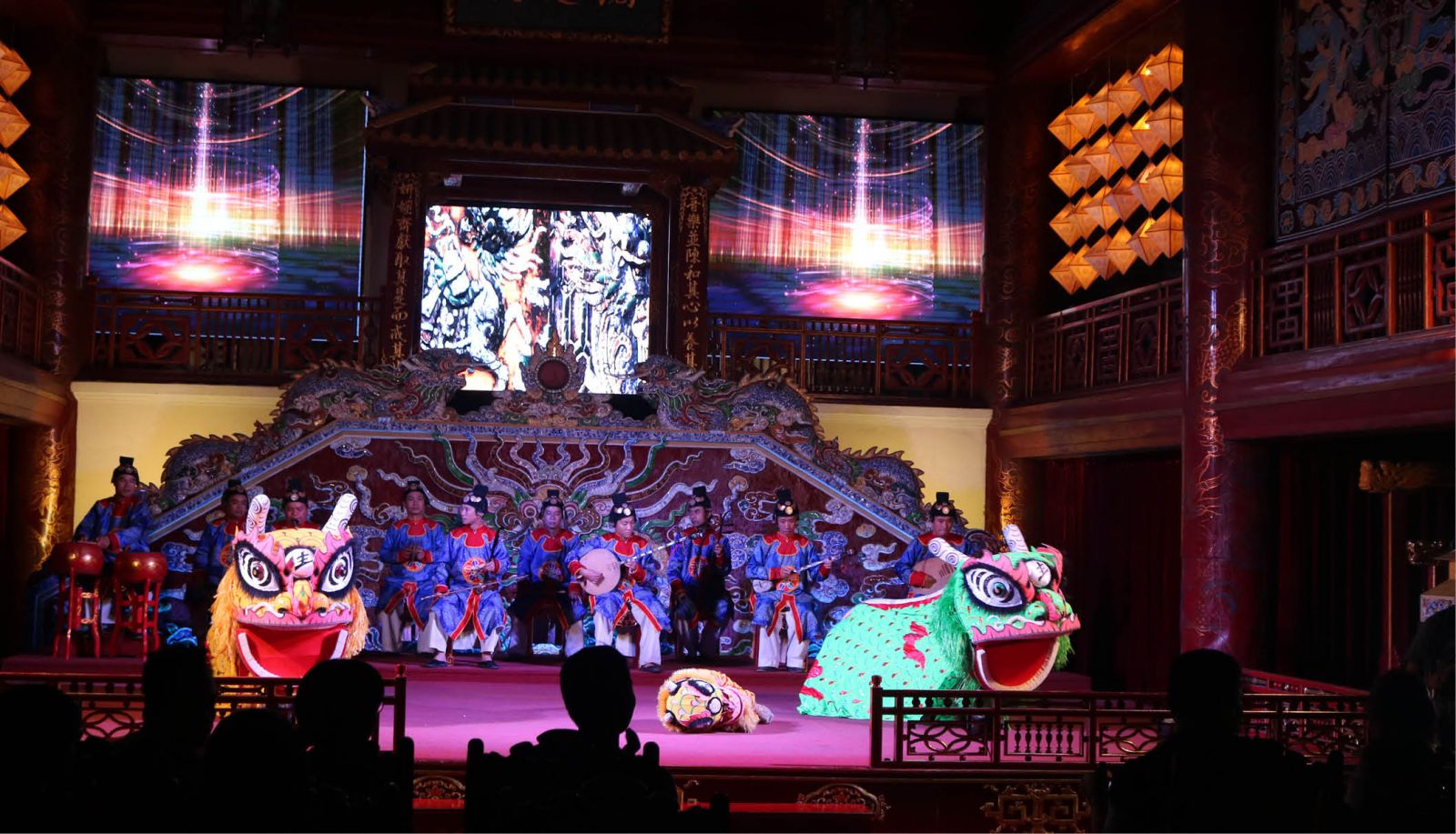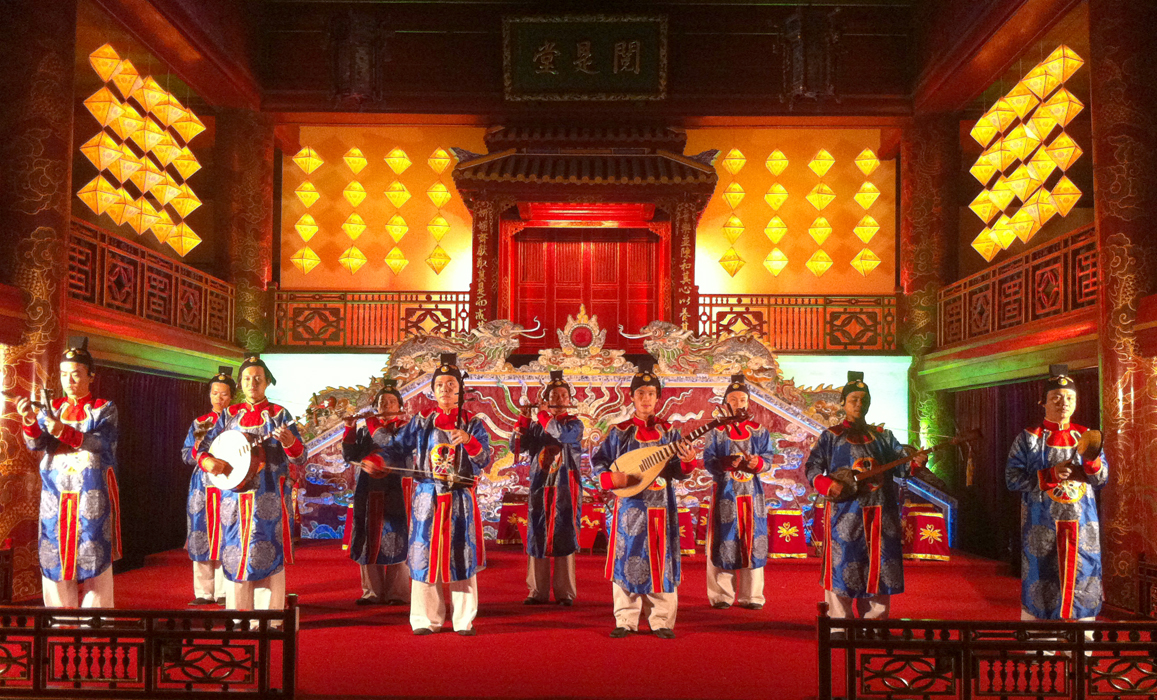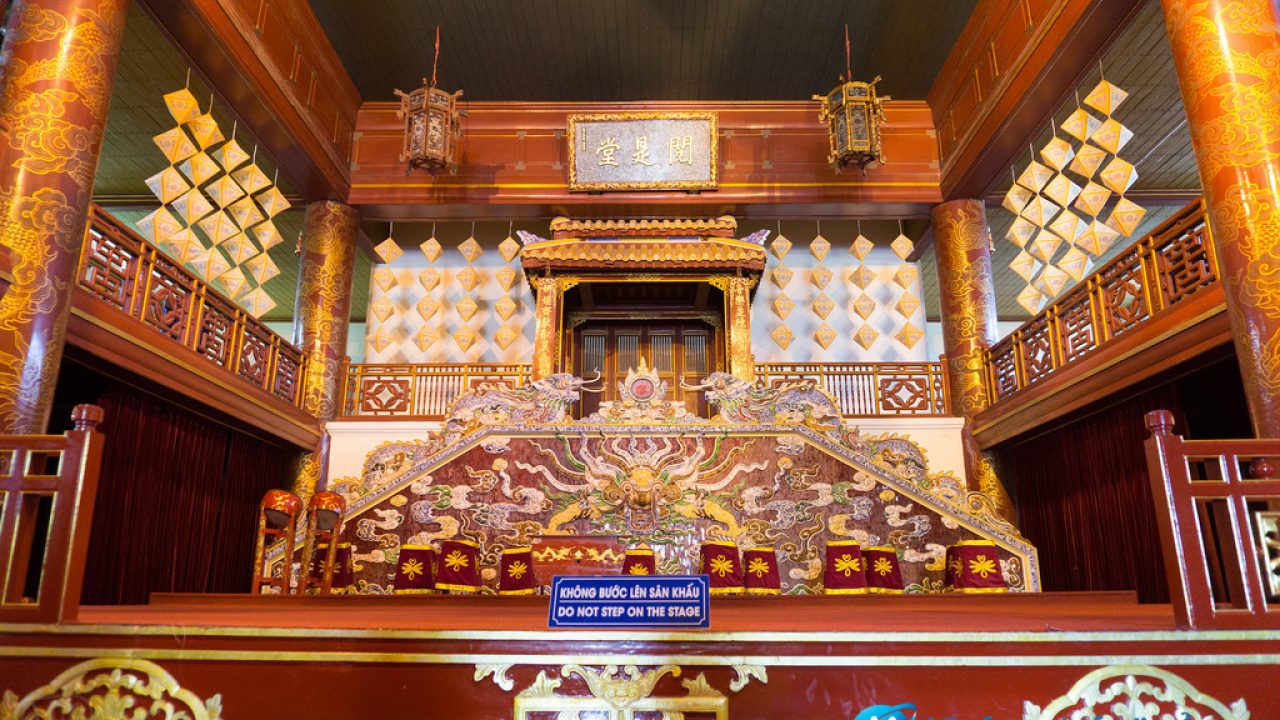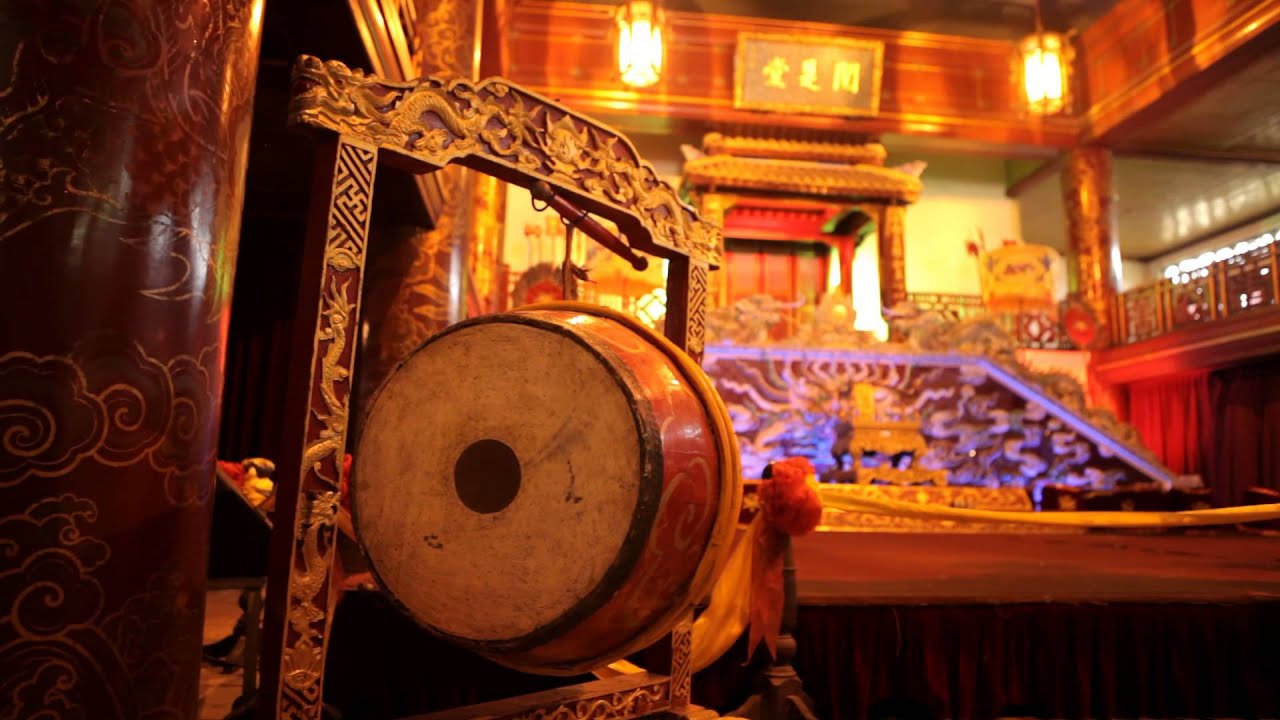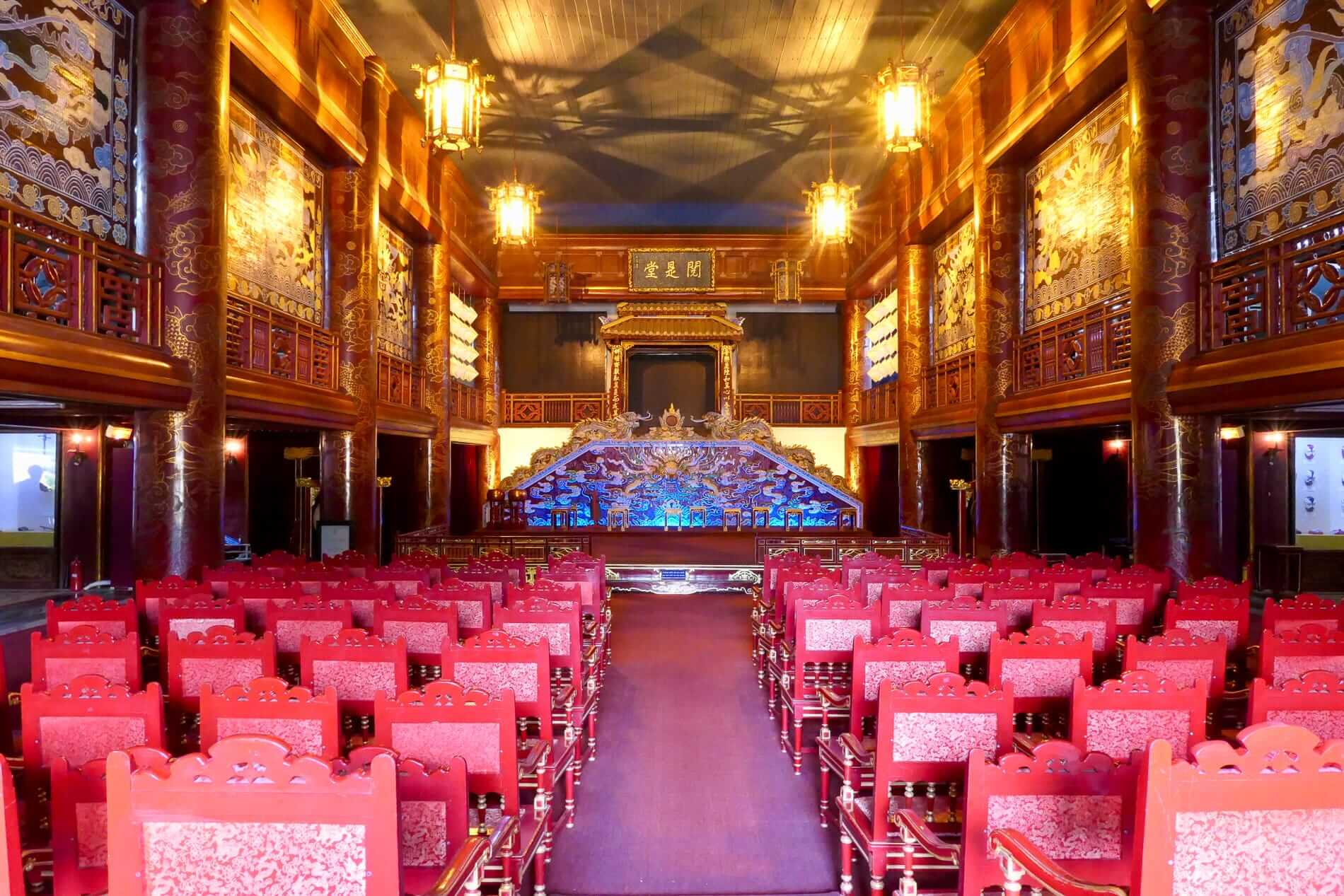
Location: Royal Theater is located in the east of the Quang Minh Palace (Palace of Brightness) in the Forbidden Citadel.
Characteristics: The Royal Theater was the oldest of Vietnamese traditional stage that remained. It was closed after the end of the monarchy (Jan 8th, 1945).
During the U.S temporary occupation it was used by the South Government for the Hue Music College (present-day Hue Art University). The Royal Theater was built by Emperor Minh Mang in 1826. It was large, rectangular-shaped with curved eaves, similar to those of Hue pagodas and communal houses, supported by two rows of iron-wood, red lacquered columns decorated with intertwined dragon and cloud designs. On each column hung a painting of Hue scenery in a golden frame, carved with dragon designs. The sky-blue ceiling above was painted with figures of sun, moon and stars, symbolizing the universe. The building was connected with the royal living quarters by snaky roofed galleries.
A square-shaped stage occupied the central part of the floor. No decoration was used to distinguish the real world from the theatrical one. Behind the stage were two doors. Actors and actresses made their entrances from the right-side and exited on the left. Behind the wall was a large room for storing scripts, theatrical headgear, footwear and props. The highest position of this room was occupied by an altar dedicated to two founders of the court opera theater. The room opened onto the court east of the Forbidden Citadel (this entrance was used by actors and actresses).
Across the stage was a high tower of two levels. The top level, next to the western wall, was reserved to the queen, concubines and maidservants. On the ground level was a carved chair for the Emperor. These two levels were kept separated by a bamboo blind which offered the spectators a good view of the outside, preventing them from being seen. Only the fluttering sounds made by fans, such as birds’ wings, or giggles could sometimes be heard.
On both sides of the Emperor's carved chair were other chairs for State guests. There sat the Governor General and the Superior Resident sometimes during the French occupation.
 Latest News
01/05/2026
When travelers think of Vietnam, names like Hanoi, Halong Bay, Hoi An, or Ho Chi Minh City often come to mind. These iconic destinations are popular for good reason. However, beyond the well-trodden routes lies another Vietnam — quieter, more authentic, and deeply connected to nature and local culture. For travelers who have already visited Vietnam or those seeking meaningful, off-the-beaten-path experiences, the country offers many lesser-known destinations that remain largely untouched by mass tourism. Here are some of Vietnam’s hidden gems worth discovering.
12/04/2025
Vietnam Airlines announced that starting May 17, 2025, all its domestic flight operations will be relocated to the newly opened Terminal T3 at Tan Son Nhat International Airport.
11/07/2025
In Vietnam, coffee is not merely a drink - it is a way of experiencing life. It is conversation, stillness, memory, rhythm, and a quite ritual that unfolds throughout the day. From the shaded sidewalks of Hanoi to the breezy riverside cafe in Saigon, coffee in Vietnam reflects the character of each region: refined, poetic, bold, and deeply personal. To travel through Vietnam is to follow the aroma of roasted beans, the whisper of coffee filters dripping slowly, and the soft clinking of glasses in morning life. Featured Tours