Location: Tomb of Tu Duc is located in a narrow valley in Duong Xuan Thuong Village (currently Thuong Ba Village, Thuy Xuan Commune, Hue City).
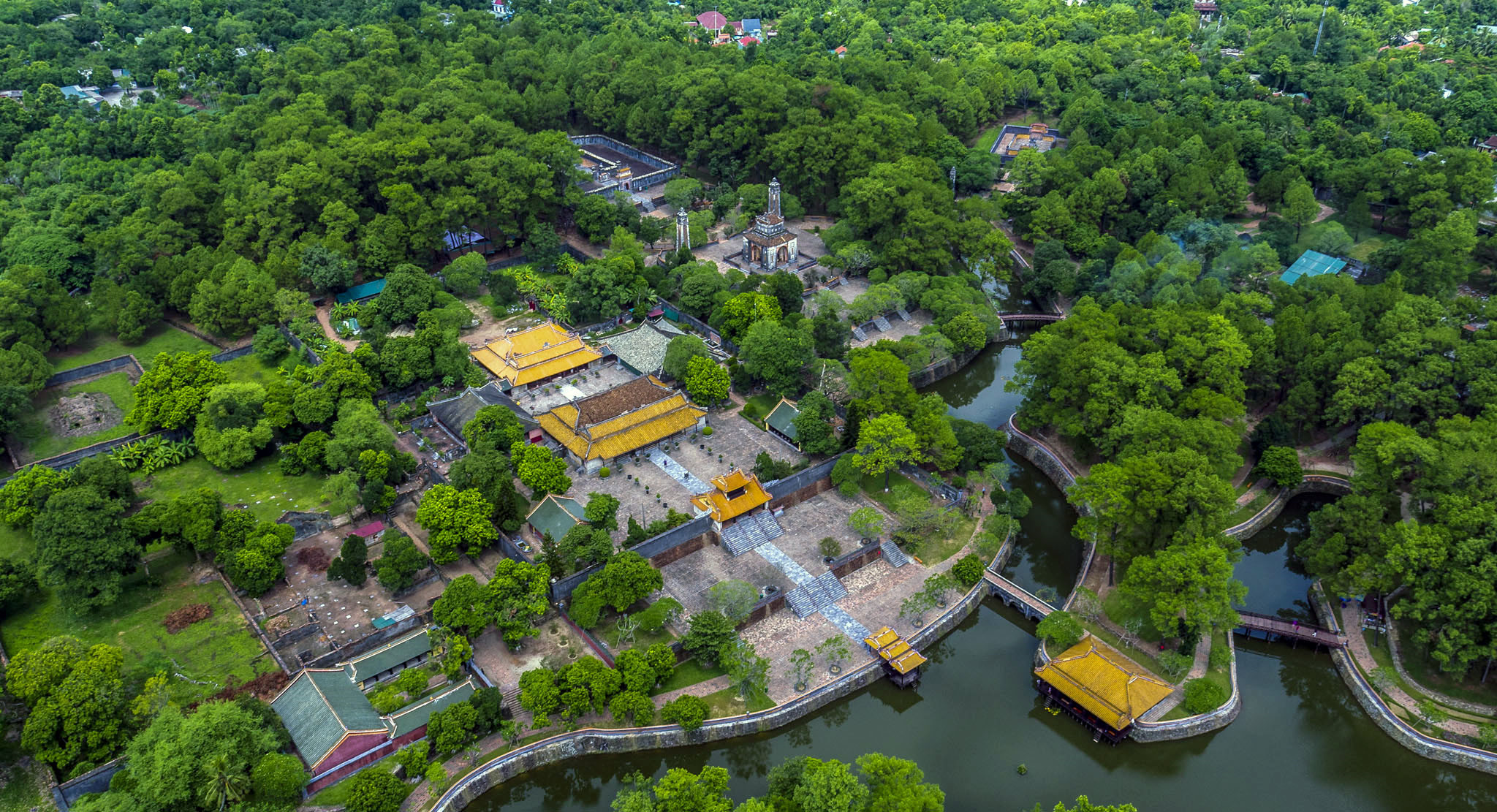
Characteristic: It is one of the most beautiful works of royal architecture of the Nguyen dynasty. The tomb lies in a boundless pine forest, 8km from Hue city-centre. Its construction started in December 1864 and finished in 1867.
On an area of about 12ha wide, nearly 50 constructions were built on terraces of various levels (about 10m difference). All constructions include the word Khiem (Modesty) in their names.
The tomb is divided into two main parts:
The temple area:
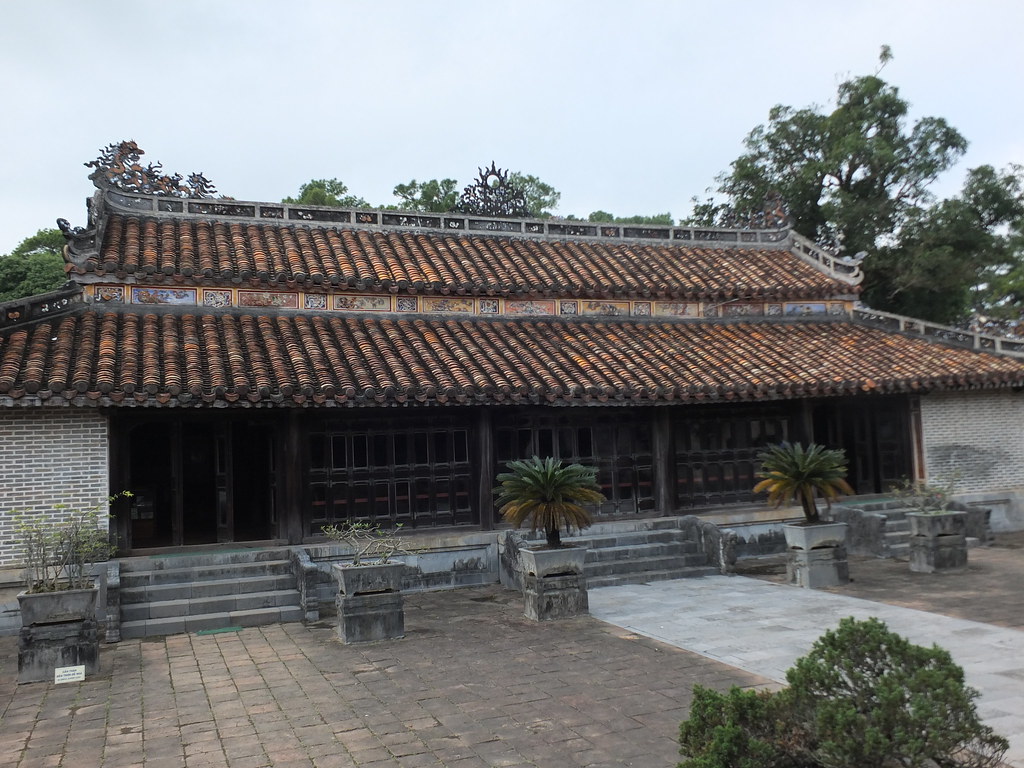
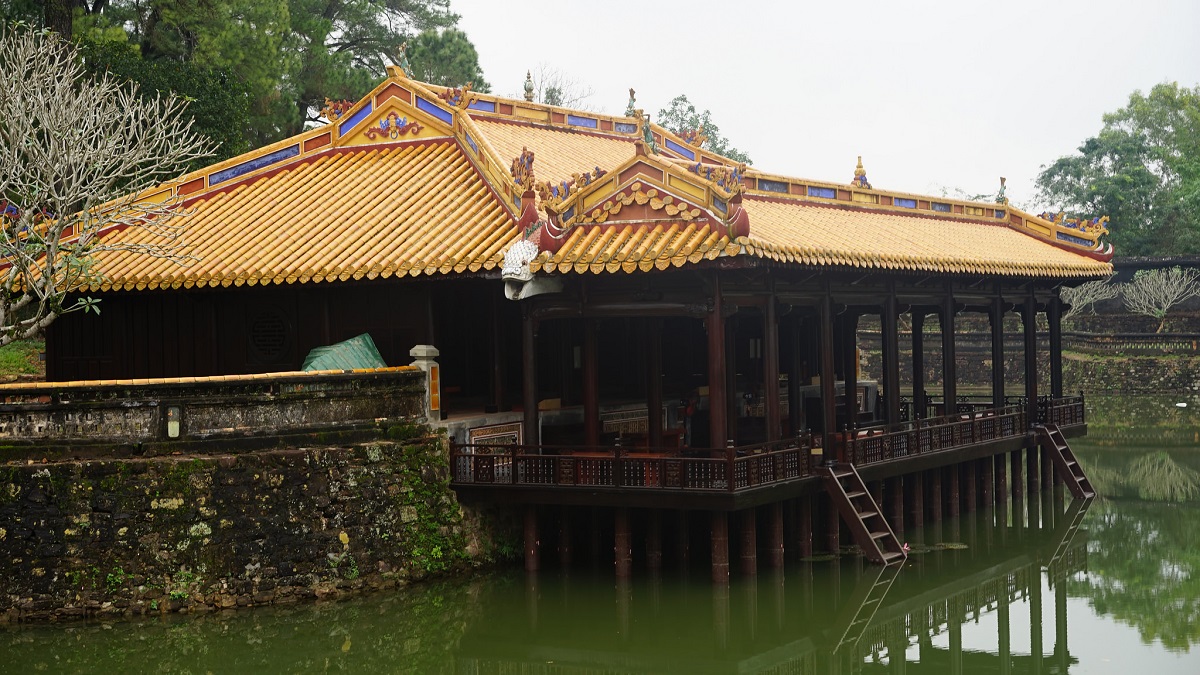
Entering Vu Khiem entrance, there is Luu Khiem Lake. On the lake are Xung Khiem Pavilion and Du Khiem Pavilion where the Emperor used to come to admire flowers, compose poems, read books, etc. Then, three Thanh stone steps to Khiem Cung Gate lead to Hoa Khiem Palace, which used to be the Emperor's working place, and is now the altar devoted to the Emperor and the Queen. On both sides are Phap Khiem House and Le Khiem House for the military and civil mandarins.
Behind Hoa Khiem Palace is Luong Khiem Palace, which was also the Emperor's resting place, and was later used to worship Mrs. Tu Du (Tu Duc's Mother). On the right of Luong Khiem Palace stand On Khiem Palace, where the royal utensils are kept. On the left of Luong Khiem Palace is Minh Khiem Theatre. Then, comes Chi Khiem, the altar to worship the Emperor's wives, Tri Khiem Palace and Y Khiem Palace were the accommodations of the Emperor's concubines.
The tomb area:
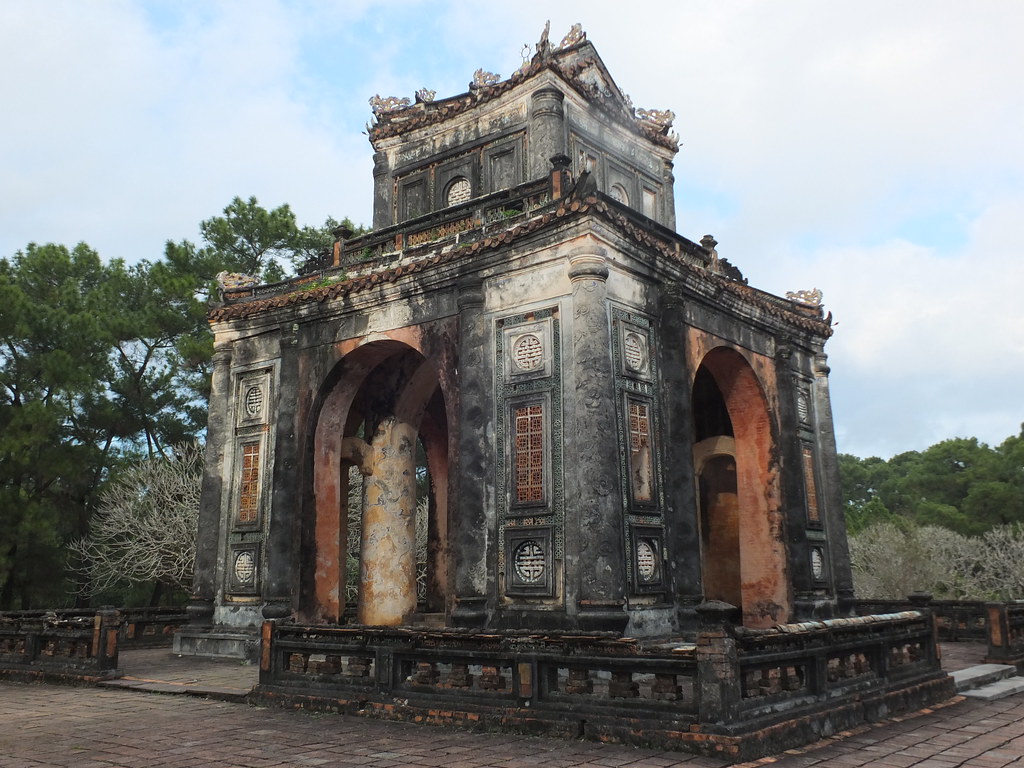
On the left of the temple is the necropolis itself slopping upward with the Honour Courtyard, the Stele Pavilion, and the sepulture. Right behind Bai Dinh (Honour Courtyard), with two rows of magnificent military and civil mandarins, is Bi Dinh (Stele Pavilion) with the biggest stone stele in Vietnam. It is inscribed with Khiem Cung narrative, composed by the Emperor himself, writing about his life and imperial cause as well as his misadventures and diseases, etc. On the hill, opposite the semi-circular Tieu Khiem Tri Lake is the Buu Thanh brick wall, in the middle is a stone house, where the Emperor was buried.
Tu Duc’s tomb is not only one of the most beautiful works of the Nguyen Dynasty, but it is also romantic scenery of mounts and lakes.
 Latest News
01/05/2026
When travelers think of Vietnam, names like Hanoi, Halong Bay, Hoi An, or Ho Chi Minh City often come to mind. These iconic destinations are popular for good reason. However, beyond the well-trodden routes lies another Vietnam — quieter, more authentic, and deeply connected to nature and local culture. For travelers who have already visited Vietnam or those seeking meaningful, off-the-beaten-path experiences, the country offers many lesser-known destinations that remain largely untouched by mass tourism. Here are some of Vietnam’s hidden gems worth discovering.
12/04/2025
Vietnam Airlines announced that starting May 17, 2025, all its domestic flight operations will be relocated to the newly opened Terminal T3 at Tan Son Nhat International Airport.
11/07/2025
In Vietnam, coffee is not merely a drink - it is a way of experiencing life. It is conversation, stillness, memory, rhythm, and a quite ritual that unfolds throughout the day. From the shaded sidewalks of Hanoi to the breezy riverside cafe in Saigon, coffee in Vietnam reflects the character of each region: refined, poetic, bold, and deeply personal. To travel through Vietnam is to follow the aroma of roasted beans, the whisper of coffee filters dripping slowly, and the soft clinking of glasses in morning life. Featured Tours