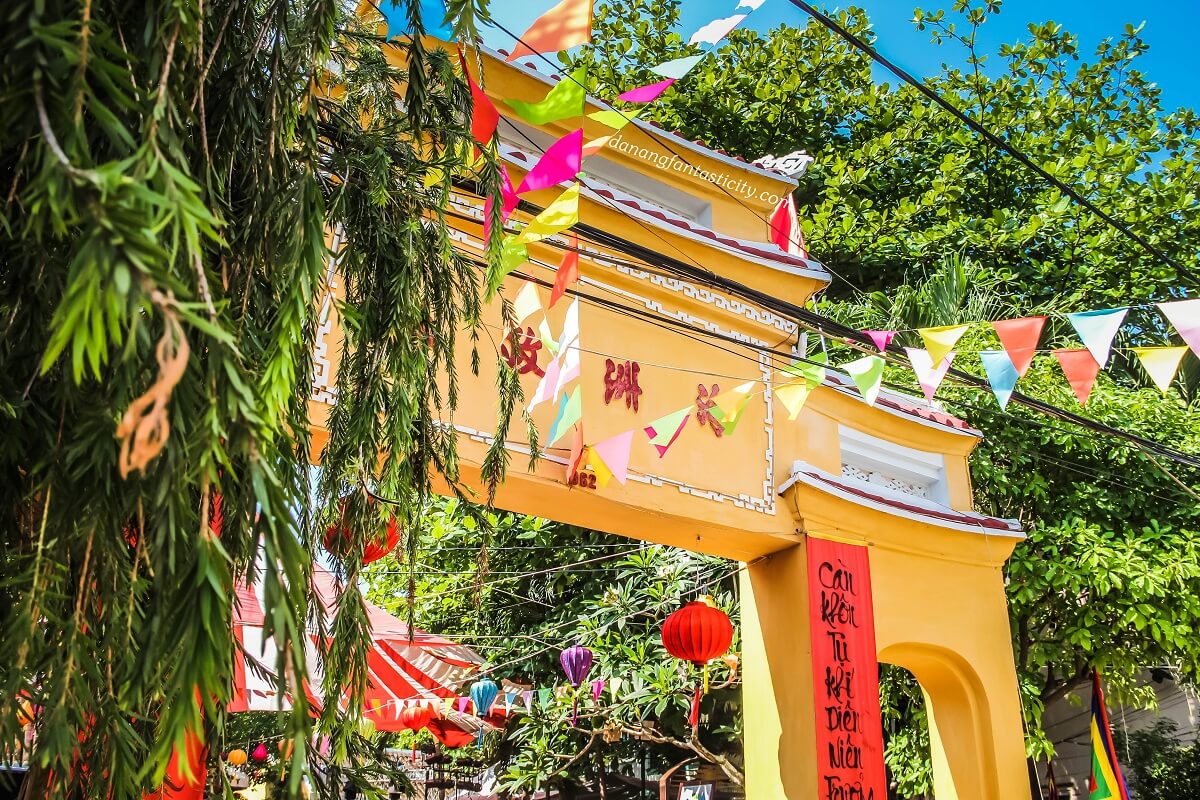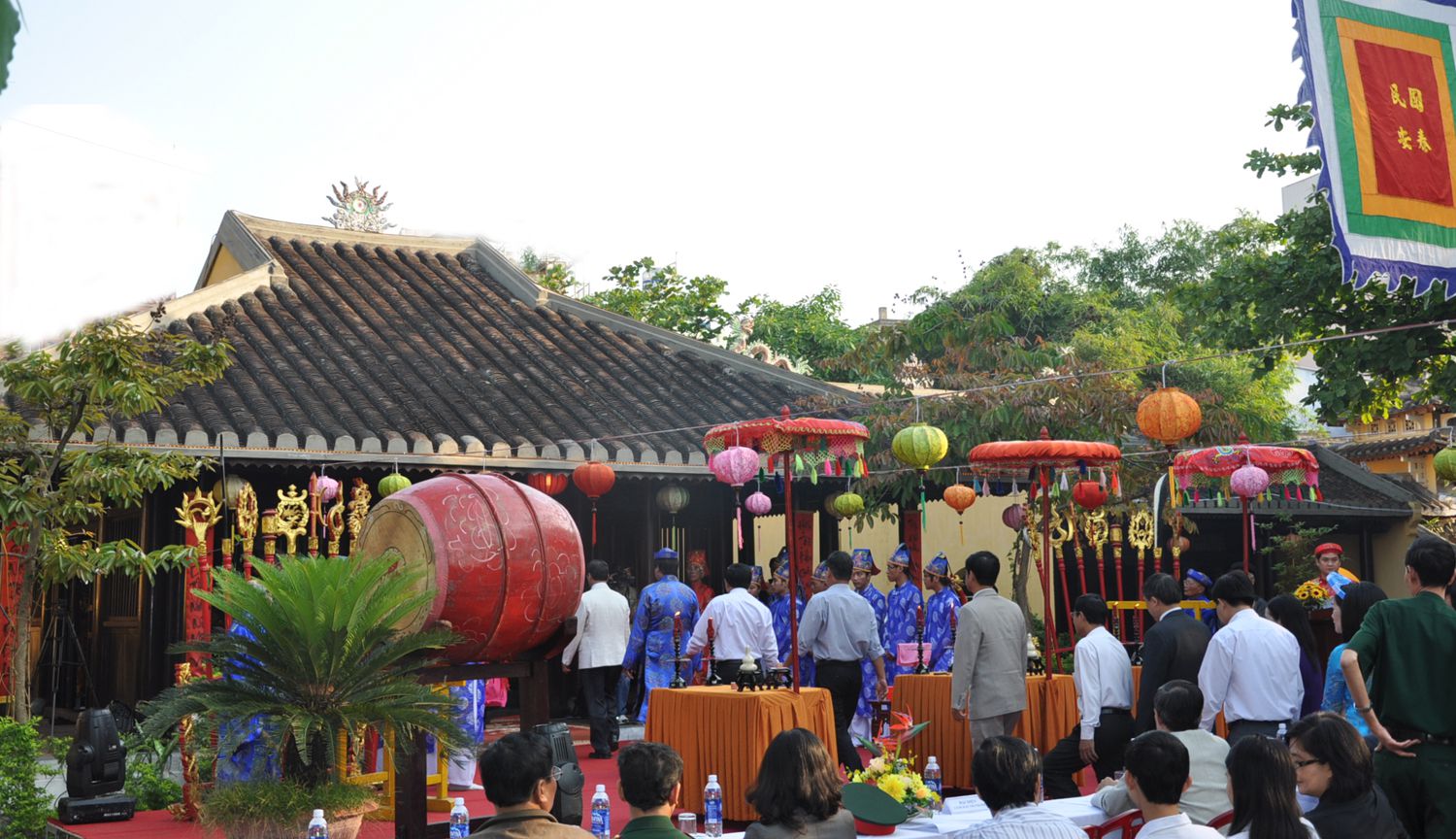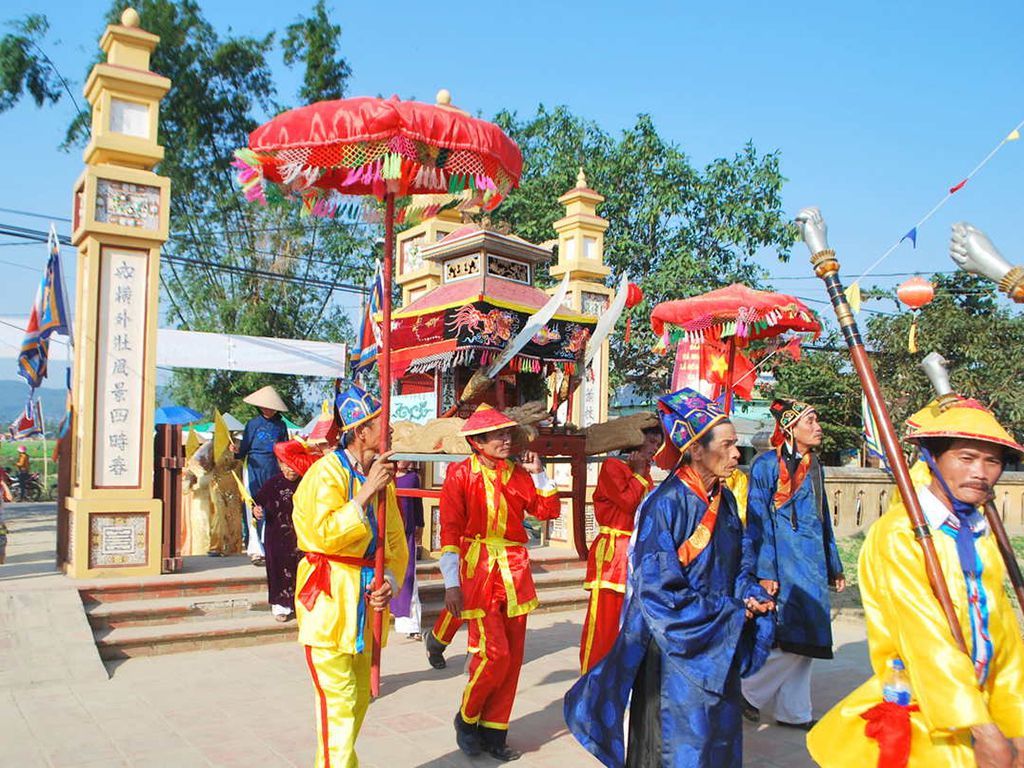
Location: The Hai Chau Communal House is located in Phan Chu Trinh Street, Hai Chau 1 Ward, Hai Chau District, Danang City.
Characteristic: Hai Chau Communal House was recognized as a national historic relic by Ministry of Culture and Information on the 12th July 2001.
In front of it there is a big lake with a rock work and a 100-year-old Bodhi tree. On the three-door temple gate there are Chinese words -Hai Chau Chanh Xa- (Hai Chau region). In the region there are Hai Chau Temple, an ancestor worshipping house, two temples of godfather in the center. The temple on the left side is of Nguyen Van clan, and one on the right is Kinh An Tu which has 42 ancestral tablets worshipping 42 clans of Tinh Gia District, Thanh Hoa Province. They all followed King Le Thanh Tong to go to the South in the year of Tan Mao (1471). Then the king established Han Giang hamlet (previously Quang Nam, currently Danang) and they gathered in Hai Chau Village, laid foundation and contributed to build Danang city.
In Hai Chau Communal House's steeple, there is a bronze bell and some Chinese words on it. A temporarily translation is. In the 5th year of Minh Mang's reign (1842), the pagoda was restored. In 1825, the king bestowed to call the pagoda Phuoc Hai by his royal decree. In the 13th year of Minh Mang's reign (1832), the Hai Chau Village built the bell on a good day.
According to history researchers, Hai Chau Communal House was Phuoc Hai pagoda where Lord Nguyen Phuc Chu on his Quang Nam oriented journey paid a visit and stayed for relaxation in the year of Ky Hoi (1719). Local people set up an altaIn front of it there is a big lake with a rock work and a 100-year-old Bodhi tree. On the three-door temple gate there are Chinese words - Hai Chau Chanh Xa - (Hai Chau region). In the region there are Hai Chau Temple, an ancestor worshipping house, two temples of godfather in the center. The temple on the left side is of Nguyen Van clan, and one on the right is Kinh An Tu which has 42 ancestral tablets worshipping 42 clans of Tinh Gia District, Thanh Hoa Province. They all followed King Le Thanh Tong to go to the South in the year of Tan Mao (1471). Then the king established Han Giang hamlet (previously Quang Nam, currently Danang) and they gathered in Hai Chau Village, laid foundation and contributed to build Danang city.
In Hai Chau Communal House's steeple, there is a bronze bell and some Chinese words on it. A temporarily translation is In the 5th year of Minh Mang's reign (1842), the pagoda was restored. In 1825, the king bestowed to call the pagoda Phuoc Hai by his royal decree. In the 13th year of Minh Mang's reign (1832), the Hai Chau Village built the bell on a good day...
According to history researchers, Hai Chau Communal House was Phuoc Hai pagoda where Lord Nguyen Phuc Chu on his Quang Nam oriented journey paid a visit and stayed for relaxation in the year of Ky Hoi (1719). Local people set up an altar worshipping him at the pagoda.
 Latest News
01/05/2026
When travelers think of Vietnam, names like Hanoi, Halong Bay, Hoi An, or Ho Chi Minh City often come to mind. These iconic destinations are popular for good reason. However, beyond the well-trodden routes lies another Vietnam — quieter, more authentic, and deeply connected to nature and local culture. For travelers who have already visited Vietnam or those seeking meaningful, off-the-beaten-path experiences, the country offers many lesser-known destinations that remain largely untouched by mass tourism. Here are some of Vietnam’s hidden gems worth discovering.
12/04/2025
Vietnam Airlines announced that starting May 17, 2025, all its domestic flight operations will be relocated to the newly opened Terminal T3 at Tan Son Nhat International Airport.
11/07/2025
In Vietnam, coffee is not merely a drink - it is a way of experiencing life. It is conversation, stillness, memory, rhythm, and a quite ritual that unfolds throughout the day. From the shaded sidewalks of Hanoi to the breezy riverside cafe in Saigon, coffee in Vietnam reflects the character of each region: refined, poetic, bold, and deeply personal. To travel through Vietnam is to follow the aroma of roasted beans, the whisper of coffee filters dripping slowly, and the soft clinking of glasses in morning life. Featured Tours